

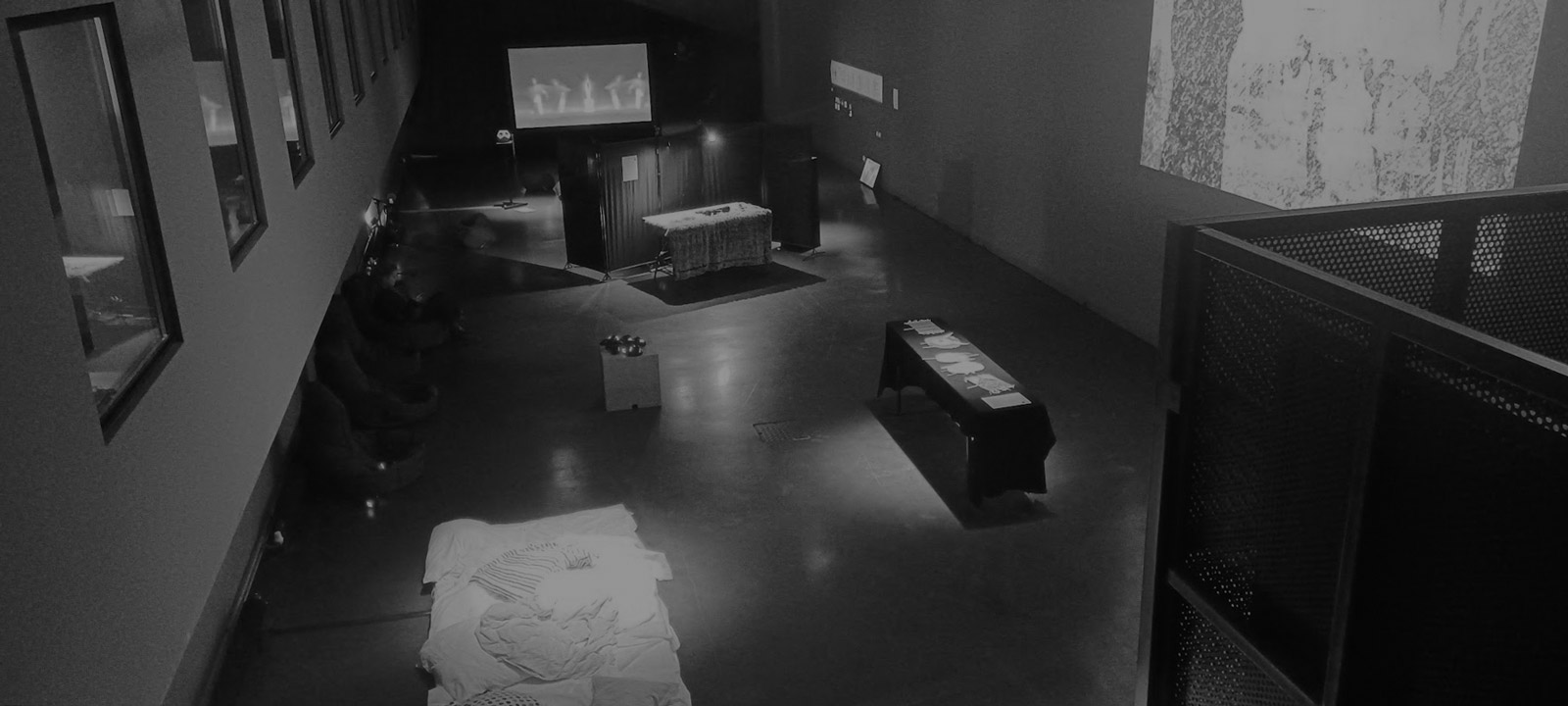
Departure From Noise
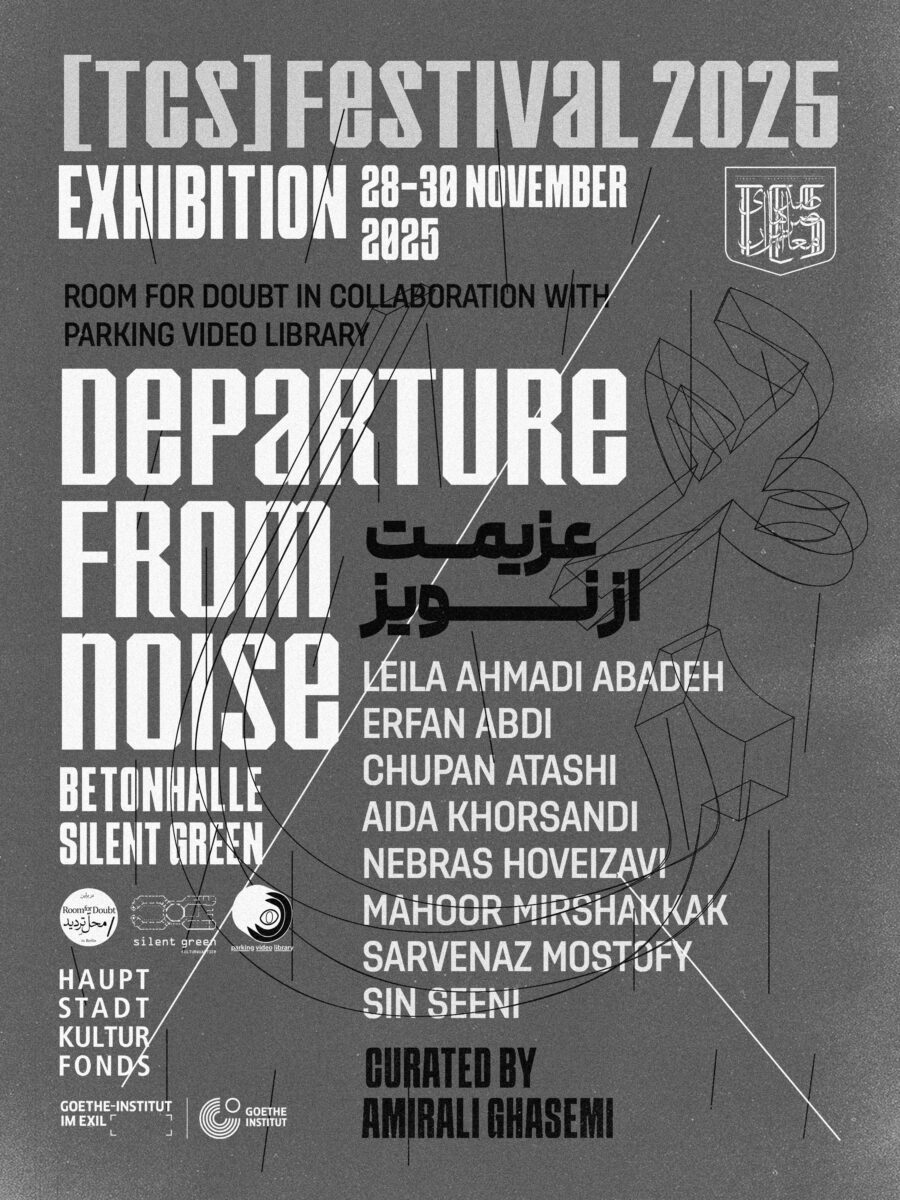
Poster Designed by Sanaz Soltani
Participating Artists
Curator
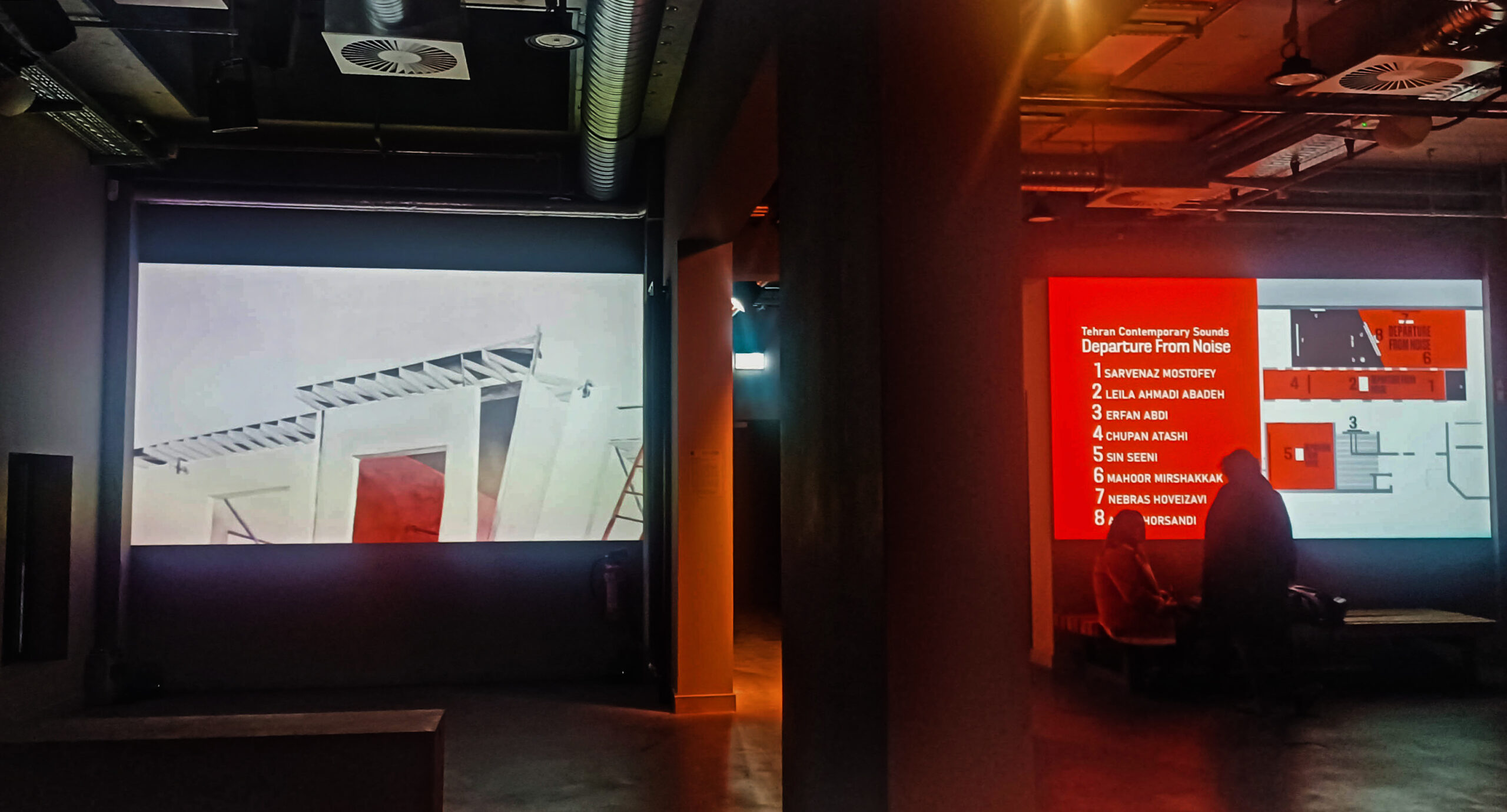
Departure from Noise adopts a critical standpoint regarding what contemporary sound can mean. In the time we live in, noise acts as a double-edged sword; it can rebel against the norms by non-conforming to existing or emerging power structures, or it can suffocate the voices of the less-heard and peripheral actors. The exhibition benefits from the actions and imaginings of eight artists, archivists, storytellers, and sound makers. As the context and title suggest, trajectories of sound offer pillars holding a temporary space at Silent Green’s Betonhalle in late November 2025.
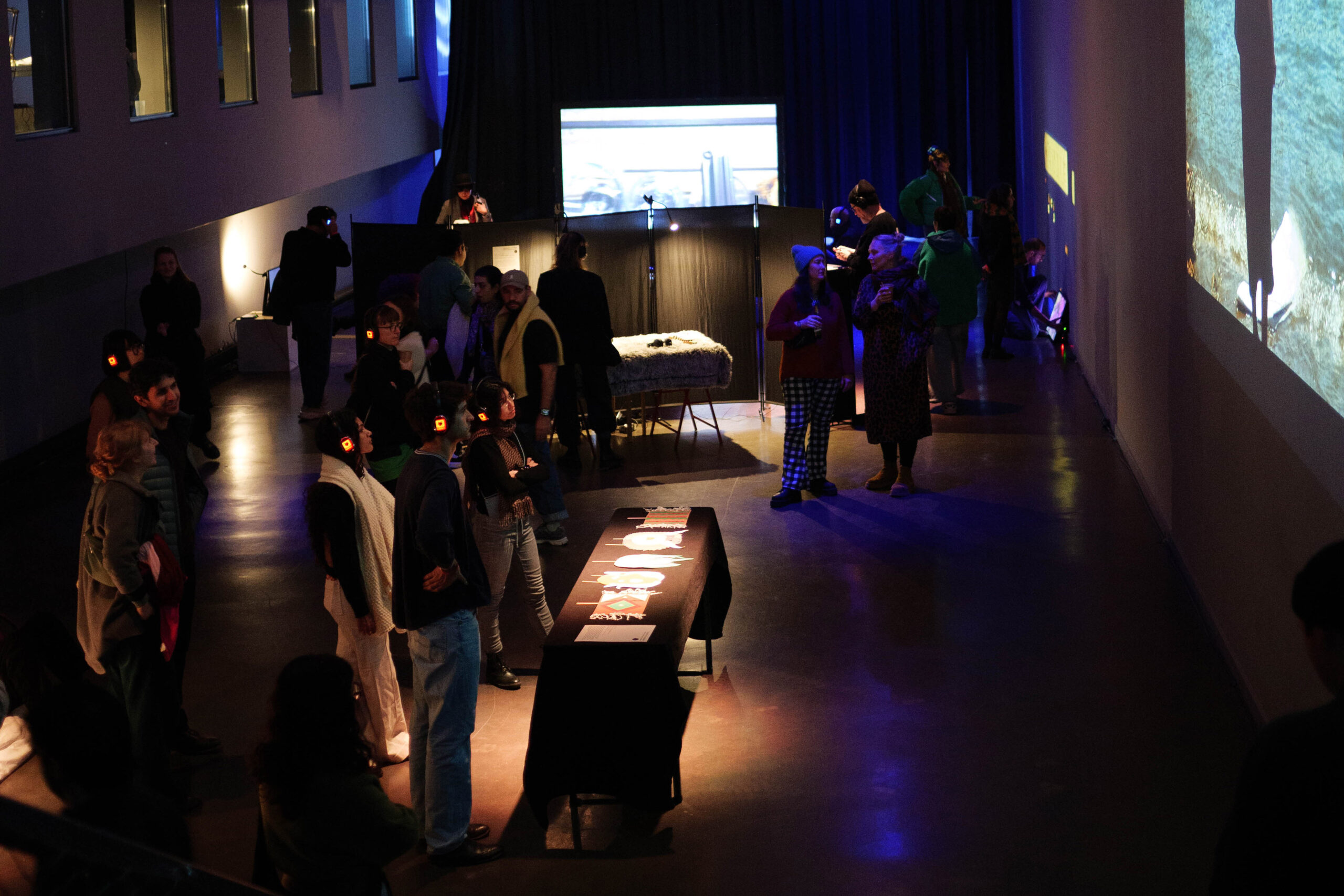
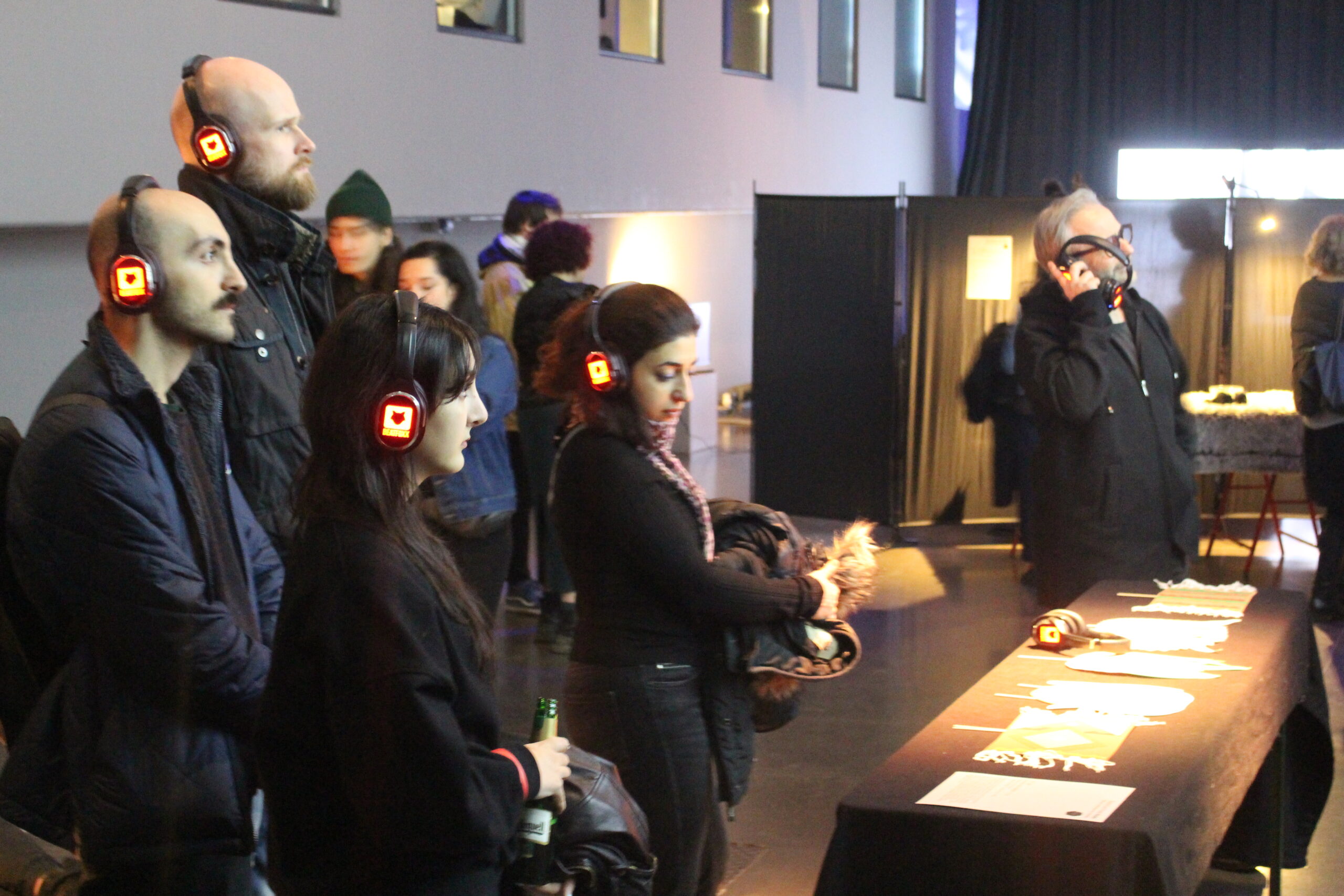
Departure from noise invites visitors to explore three pathways to overlapping territories: the realm of stories with Leila Ahmadi Abadeh & Nebras Hoveizavi, Language Prison with Chupan Atashi, Sin Seeni & Aida Khorsandi, and finally, Emancipation with Sarvenaz Mostofey, Erfan Abdi, and Mahoor Mirshakkak.
While erased bodies become tainted with narratives from borders to the recurring process of denial and elimination in “realm of stories” as the first chapter, in the second setting “Language Prison”, three strategies appear to enhance imaginary/auditory escape routes, sharing coping mechanisms where words are not enough. Ephemeral moments of “Emancipation” follow the path to the last chapter, where letting go, remembrance, and care meet. These overlapping areas are embedded and interwoven in the space to be decoded and to be found through active anticipation of a yet uncertain future. An imminent breaking point becomes both all one can hope for and the very cycle we are destined to repeat.
Works:
Unofficial (2020-2025)
Leila Ahmadi Abadeh
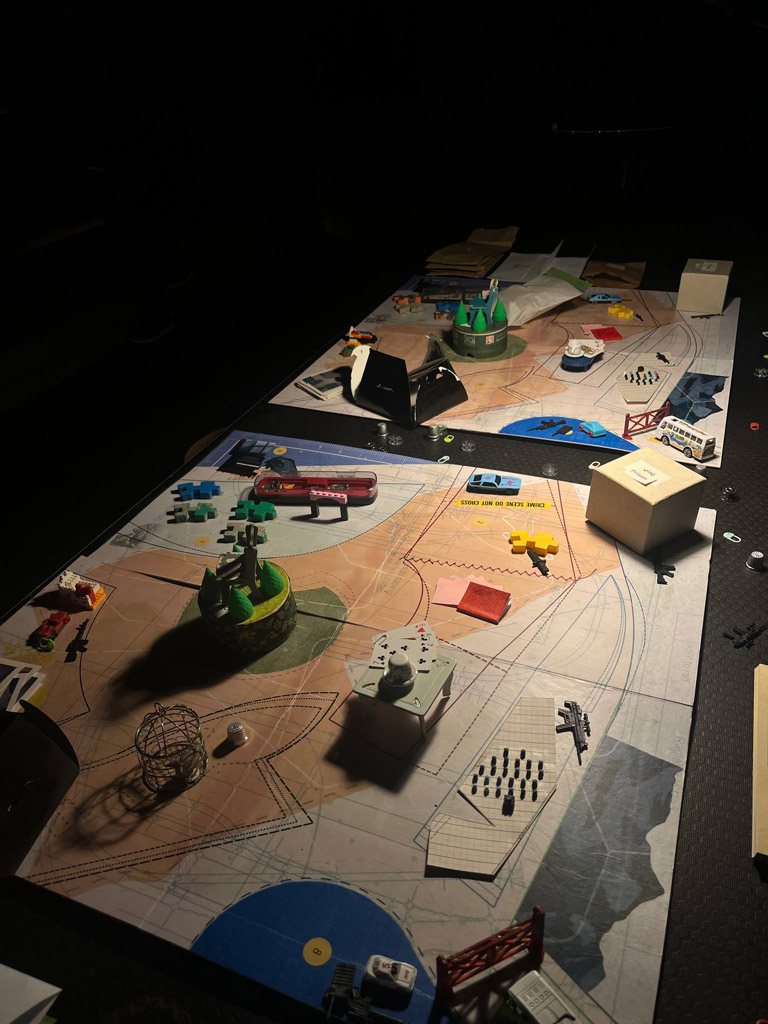
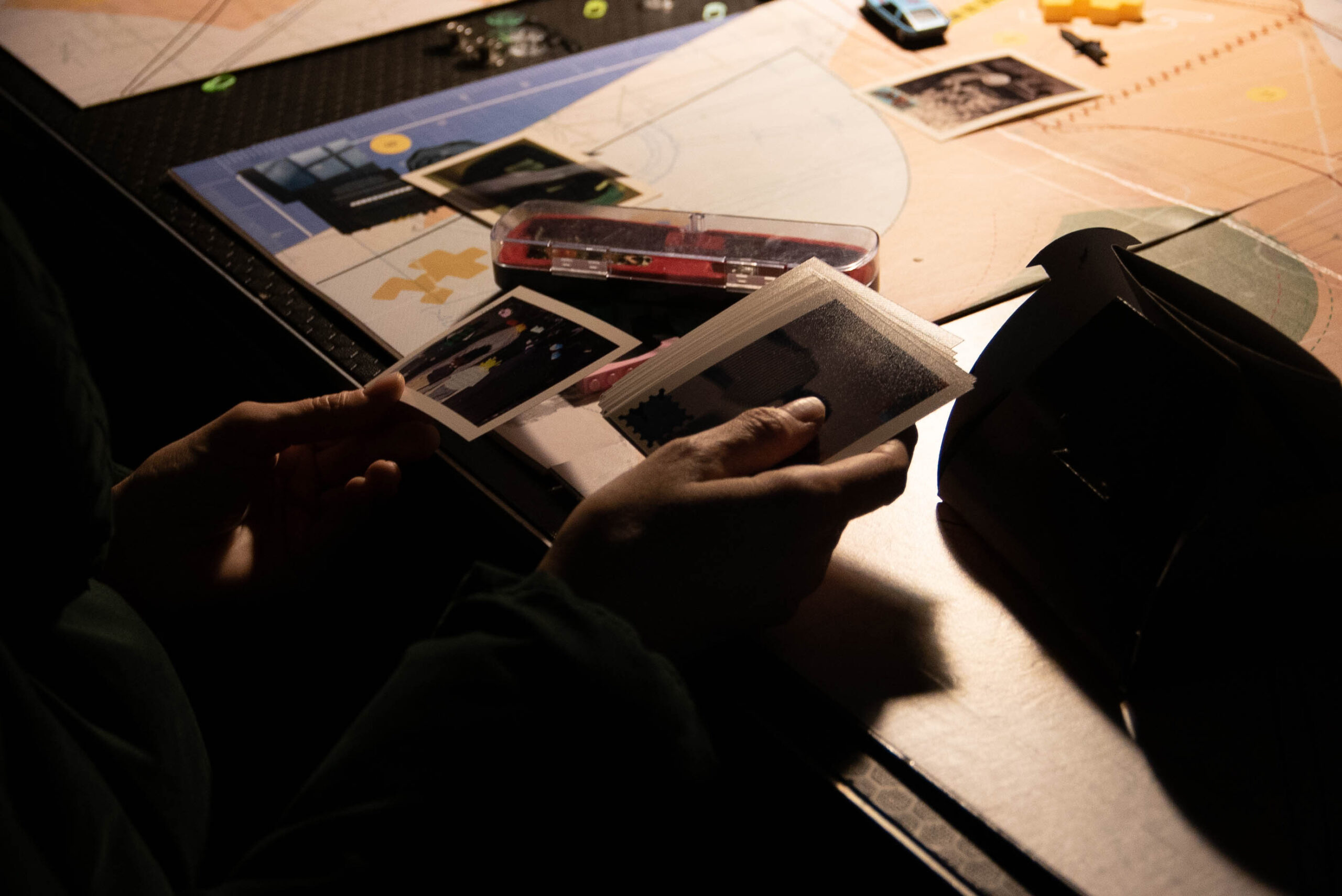
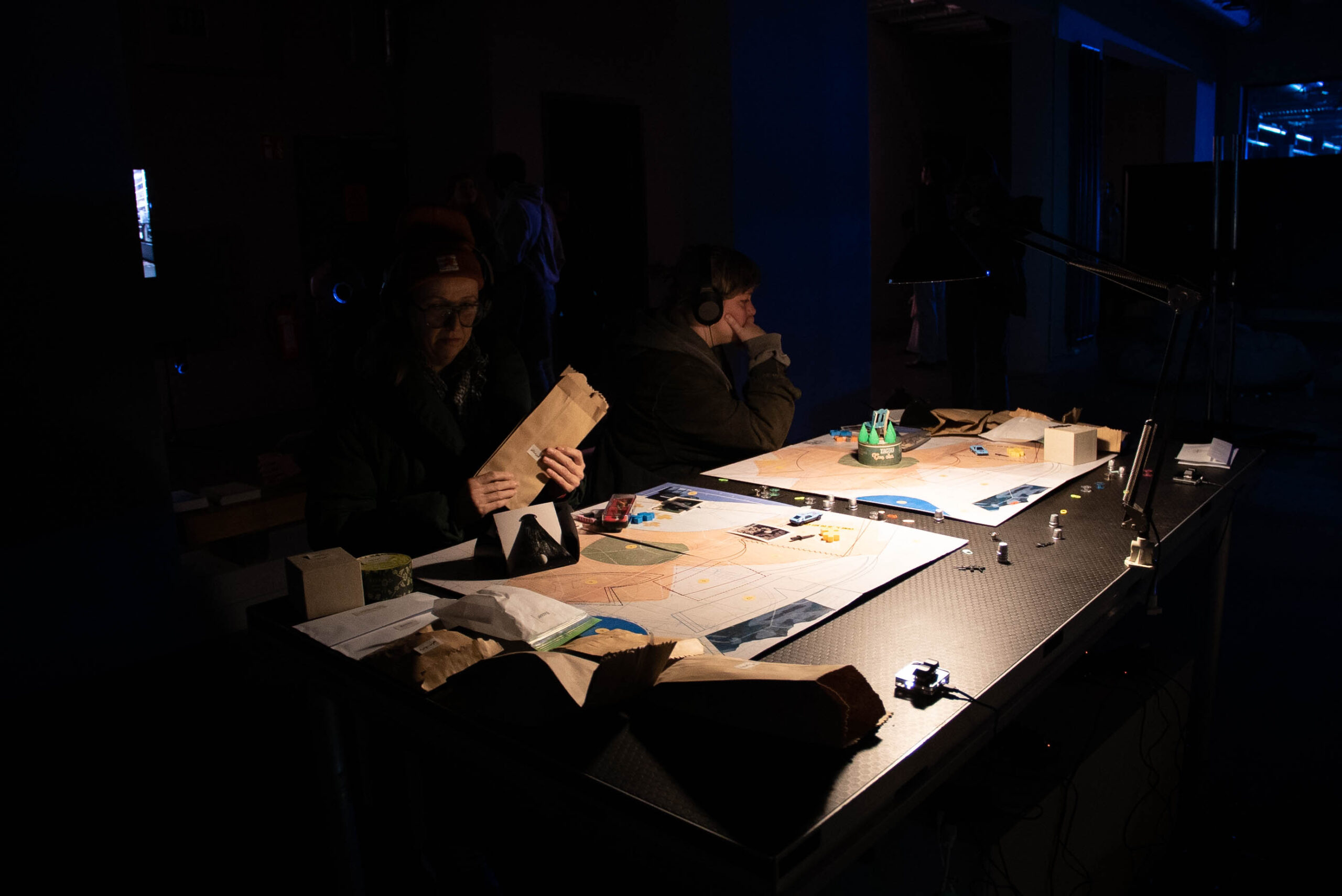
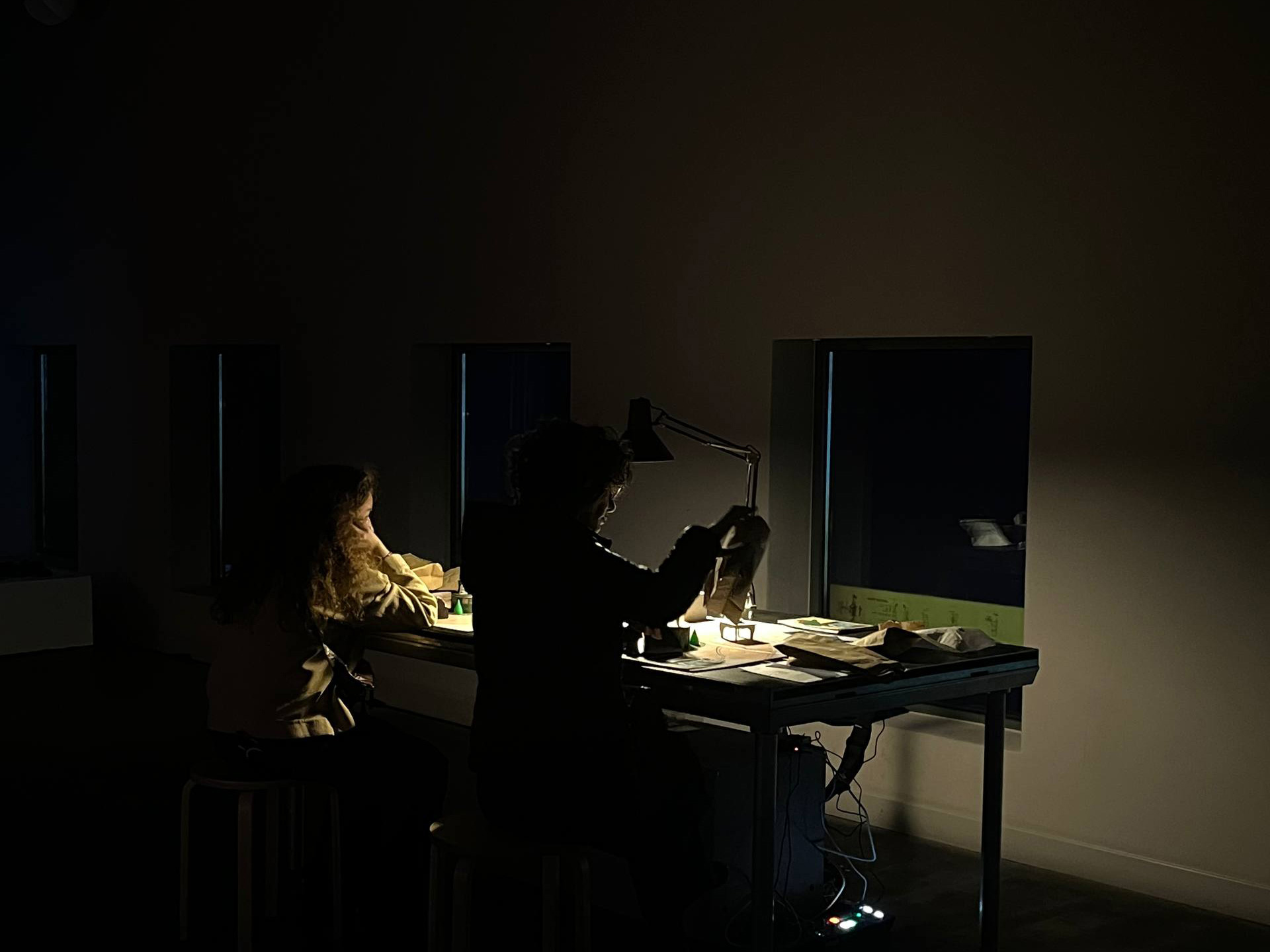
Leila Ahmadi Abadeh’s Unofficial revolves around an audio instruction that guides us through the experience of social exclusion and xenophobia in an unnamed city. This experience unfolds through an interactive object theater designed for one
person/witness at a time. The objects in the performance are randomly selected from broken children’s toys, and the script of the play is written based on them.
The performance was first staged in 2020 under the title “Moving Story” as part of Motevali, Multimedia Performances at Vali Gallery in Tehran, and later presented in the current format, as “Unofficial” in 2022 at Transient Works Laboratory in collaboration with Suite 42 in Tehran. Each time, through direct feedback from the audience due to the individual nature of the experience, the performance has been refined and enriched.
The work raises this question: How does violence persist and spread in a city where official teachers are absent, and silence has replaced truth? A place where there is no cultural option but fanaticism, and no pastime except joining a team, whether large or small! One might say these stories are fictional, but they are drawn from a kind of
history we have all grown up with across the world—a history that has never been written anywhere and perhaps never will be. (With the hope that it will be.)
Concept, Text, Farsi Narration: Leila Ahmadi Abadeh - English Narration: Tanasgol Sabbagh - Board Design: Sajed Kheyrollahi - Translation: Bahar Ahmadifard - Text Editor: Isar Aboumahboub With special gratitude to Amirhossein Khorshidfar, Yekta Nejat Pour, Shahin Peymani, Mahoor Mirshakkak, Azade Shahmiri
Border Run (2025)
Nebras Hoveizavi
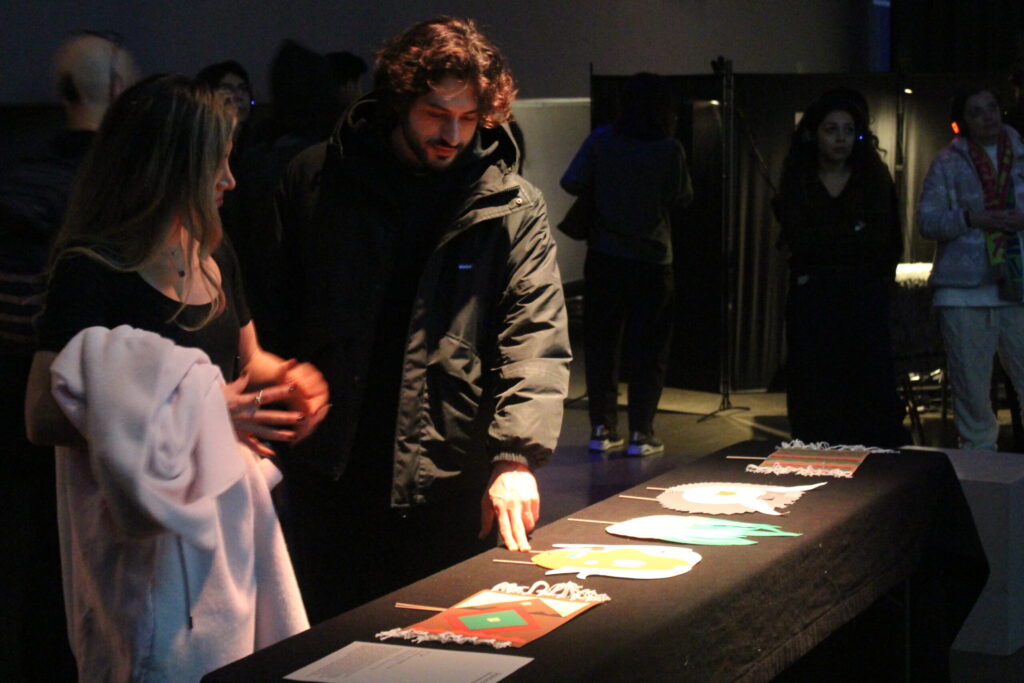
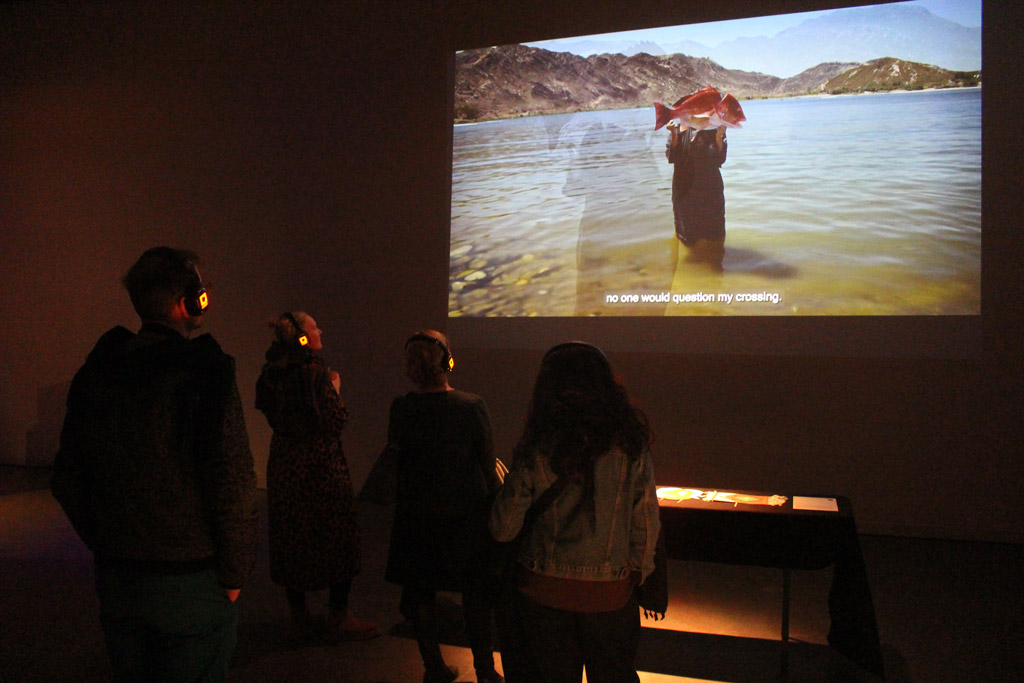
Border Run is a 25-minute experimental, hybrid documentary pieced together from WhatsApp voice notes, classroom recordings, performances, and documentary footage. Following an art teacher working without legal status in an unnamed West Asian country, the film unfolds in fragments that mix testimony, lesson-plan-inspired gestures, and on-screen statements. Layer by layer, it reveals the precarious realities of displacement, borders, and survival. Both intimate and constructed, the film assembles these fragments into a meditation on legality and the fragile right to exist.
more on: Border Run
Gulistan (2011)
Chupan Atashi
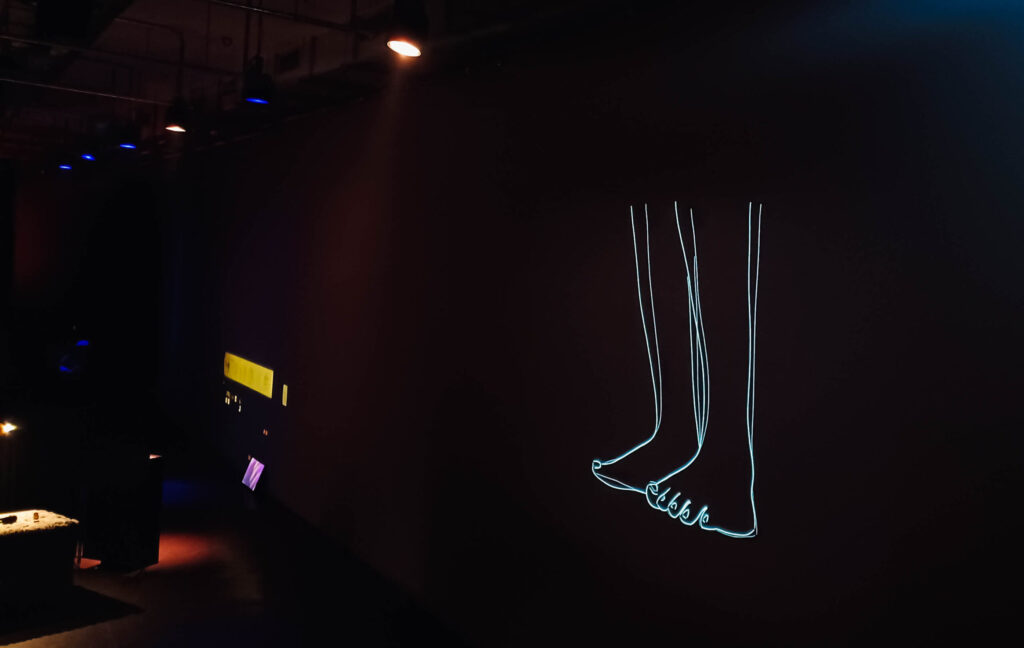
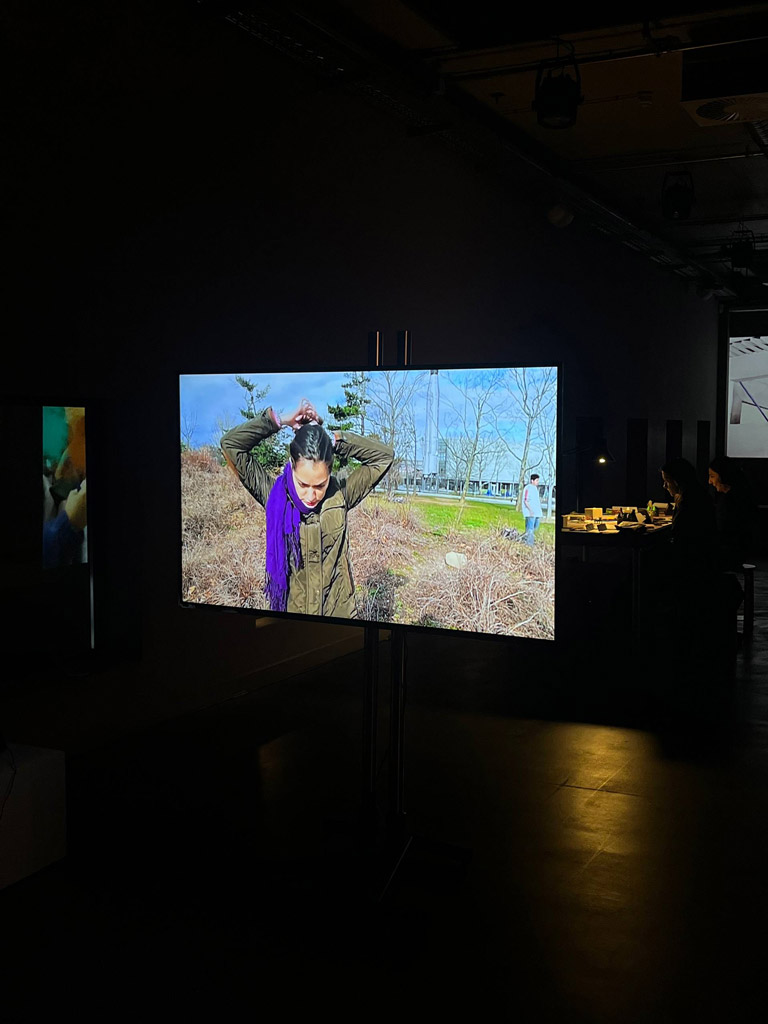
In Gulistan, Atashi repeatedly recites a passage from Sa’di’s poem of that name (The Rose Garden, 1258), which is a classic work of Iranian literature. In the text, Sa’di introduces his writing as a method for capturing fleeting beauty and rendering it eternal within the pages of a book. His Gulistan will be a garden “whose vernal bliss the passage of time cannot turn to the woes of winter.” However, Atashi’s Gulistan is quite different. In a series of vignettes, mostly shot in New York, Atashi attempts to recall and recite Sa’di’s poem while frequently being interrupted. One early scene shows her on a busy street, where her thoughts are jolted by loud, distracting surroundings. Later, we hear her camera become damaged as it is infiltrated by rainwater. From this unplanned accident onwards, we hear nothing of their recitations, with only ambient noise now reaching our ears. Anything but eternal and unchanging,
Atashi’s Gulistan is an instead monument to contingency, permeability, and entropy, which eventually slides into noise. While Sa’di’s Gulistan is a classic work of world literature, filled with especially deep significance for people from Iran, throughout her short film Atashi delivers this text in an offhand, almost careless manner, as if its meaning had been emptied out. At time,s Atashi struggles to remember the words, so that their work seems to become a mere exercise in rote learning. However, while the sound of Sa’di disappears and the meaning of his words seems lost and contradicted, Atashi’s Gulistan nonetheless finds its own alternative mode of communication through the artist’s performing body. Their body language, their expression of alienation, and their sheer corporeal presence before the camera are all recorded for longevity, tracing the affect of a particular moment, which may have passed, but still leaves its mark. by David Hodge
more on Gulistan
The Invisible Tablet (2025)
Sin Seeni
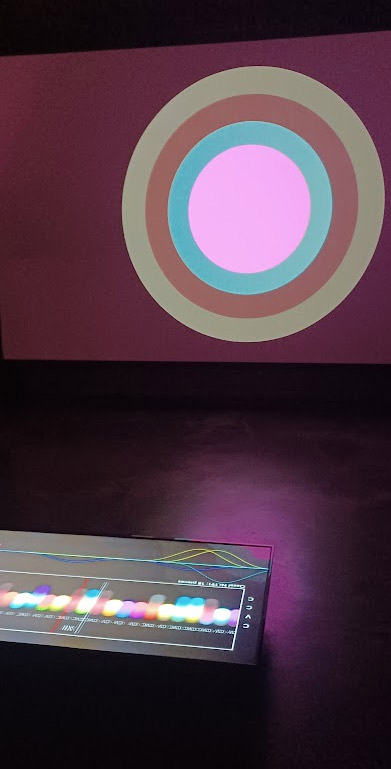
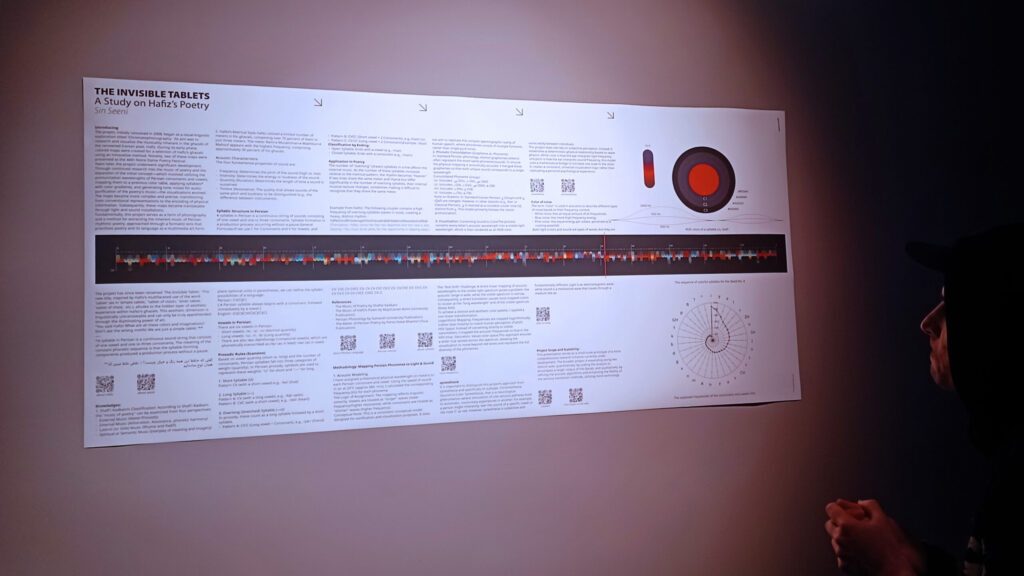
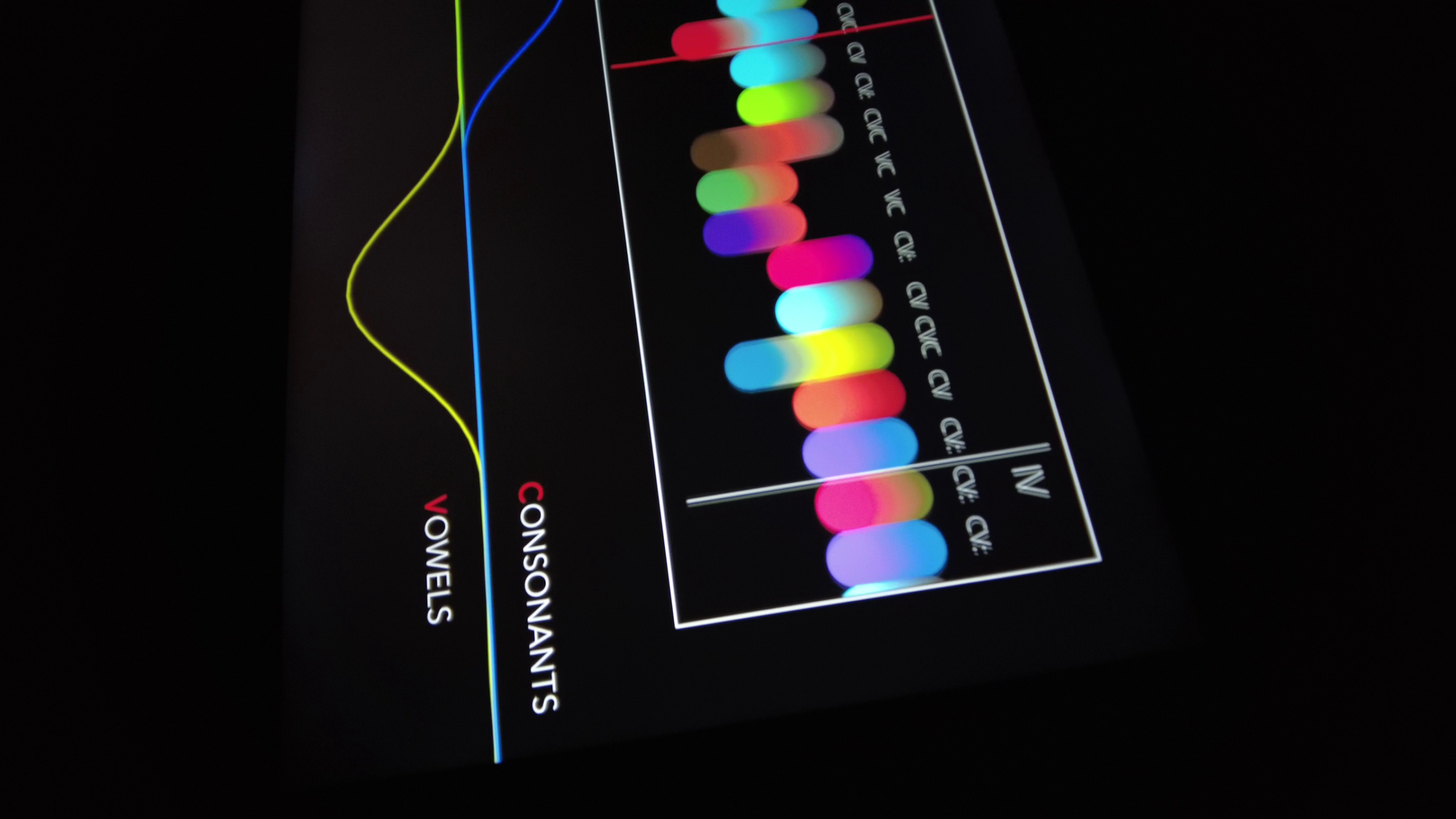
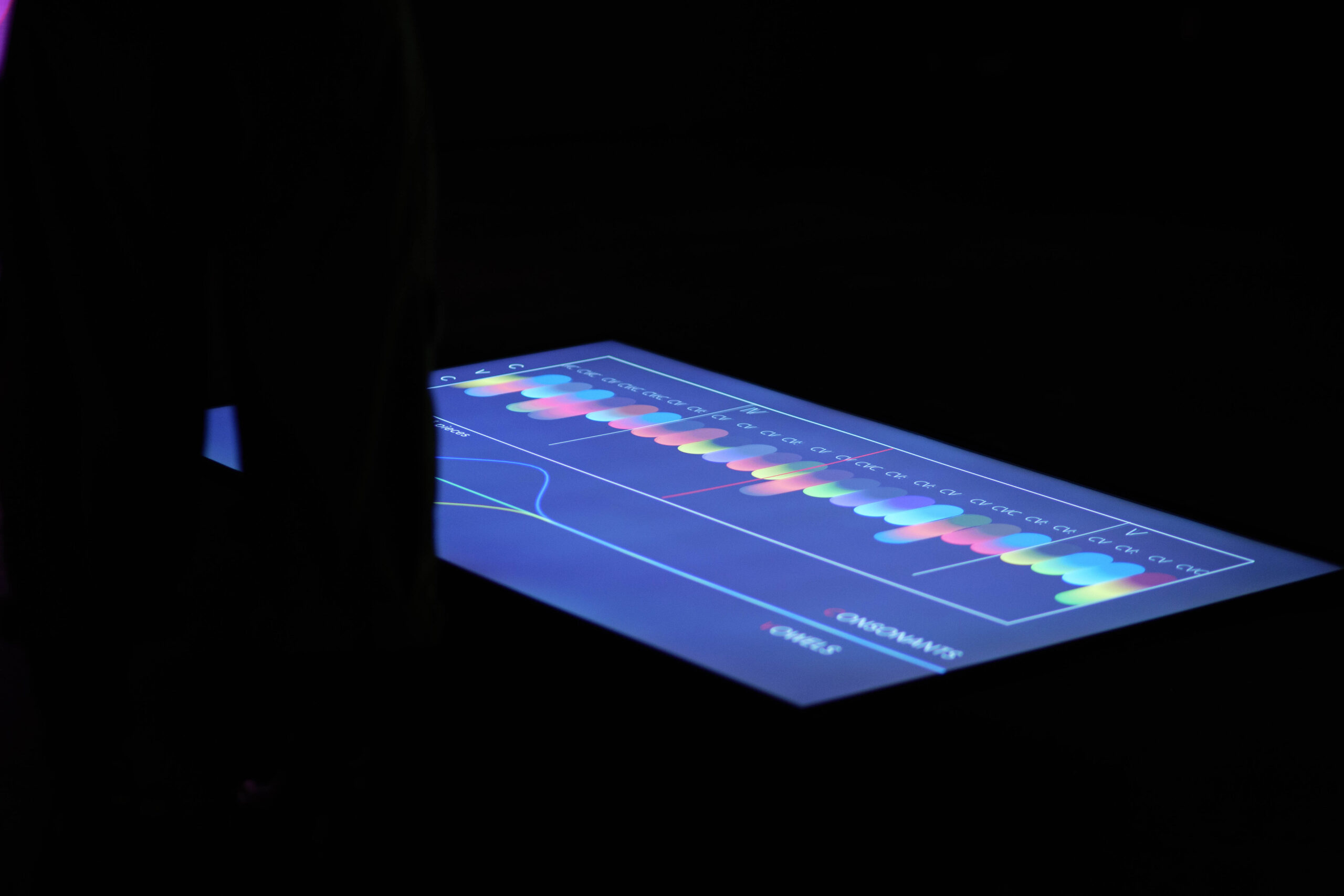
The Invisible Tablet, alludes to the hidden layer of aesthetic experience within Hafez’s ghazals. This aesthetic dimension is linguistically untranslatable and can only be truly apprehended through the illuminating power of art. The project serves as a form of phonography and a method for extracting the inherent music of Persian rhythmic poetry, approached through a formalist lens that prioritizes poetry and its language as a multimedia art form.
more on The Invisible Tablet
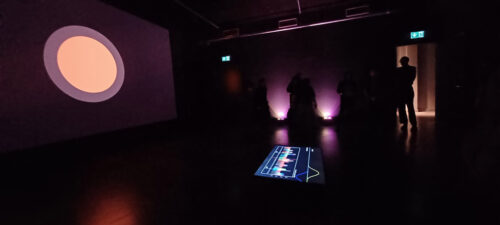
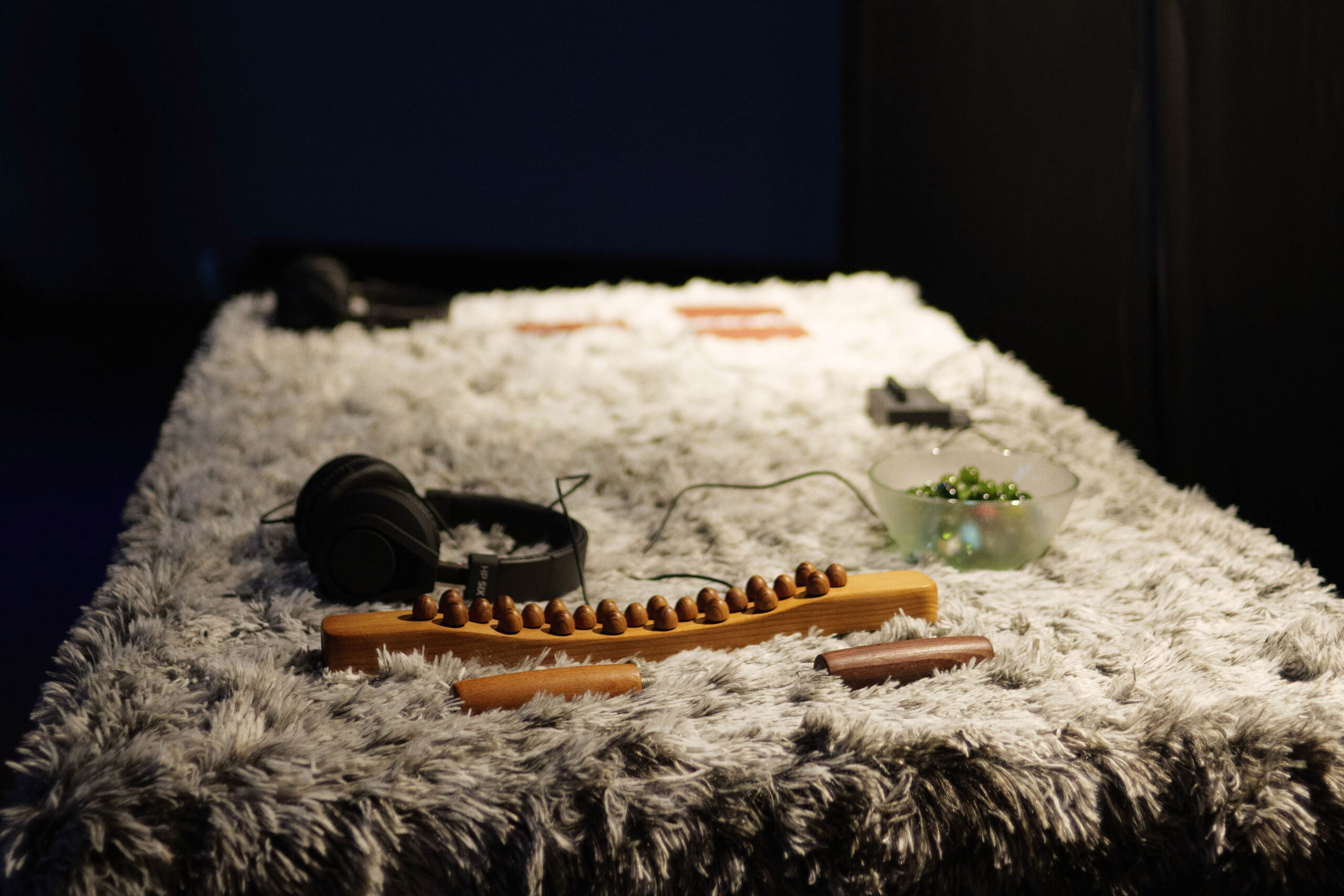
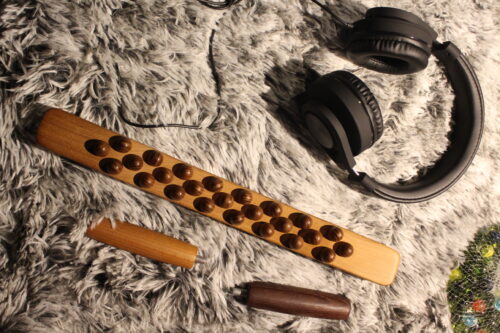
Touch Me, Blanket (2025)
Aida Khorsandi
The sound is tactile. The texture is sound. Touch is lost to lust, and the commodified sound is impelled to be unheard while present. The collective body screams to be shocked, to be banged, to be crashed, the ears to be shattered, to be blasted. To be blasted to sense and discern, to be touched and transported, to sense and discern. So much noise, harsh noise, loud blasts, infinite feedback to sense and discern, to depart from the noise to clarity.
The hyper automated ‘intelligent’, artificial or not, the humanoid of all trades, requires a few touches to turn to sound, efficient and effortless, cheap and facile, “easy-breazy”. The objective is to remove all the constraints, and to build the most well ordered machine, so you never move a finger, or ‘just’ move a finger. To be desensitized to pain, pain of labour, cheap labour, inefficient, disorganized and imprecise labour. To be desensitized to the shreds of all life and and unalived beings, to the smell of blood, and to unhear and tune out from hums and buzzes of killer birds, the most efficient birds, birds of the abyss; the efficient unaliving machine.
Nevertheless, you can touch me. I am just a blanket, void of intelligence and mind, just a body to be sensed, and discerned, to be listened to in attention, to be contacted by skin, inefficient and imprecise; ephemeral and insignificant.
more on Aida Khorsandi
Safe & Sound (2022)
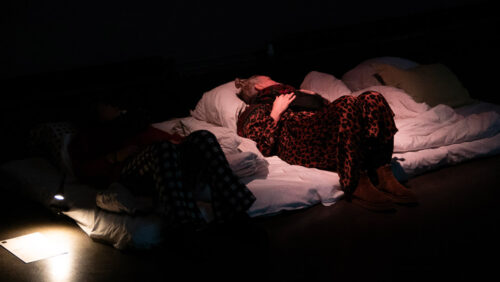
Mahoor Mirshakkak
Mahoor Mirshakkak is a multimedia artist whose work investigates memory, history, and the enduring psychological legacy of conflict in contemporary Iranian society.
Her practice is research-driven, utilizing a personal archive of self-recorded sounds and videos. This ongoing investigation is central to projects like “A live-Life of the Pre-Recorded” (Centre Intermondes) and finds a concentrated expression in SAFE & SOUND.
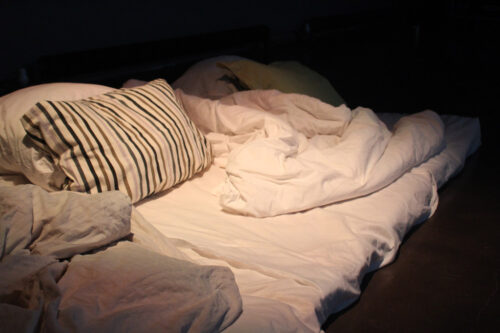
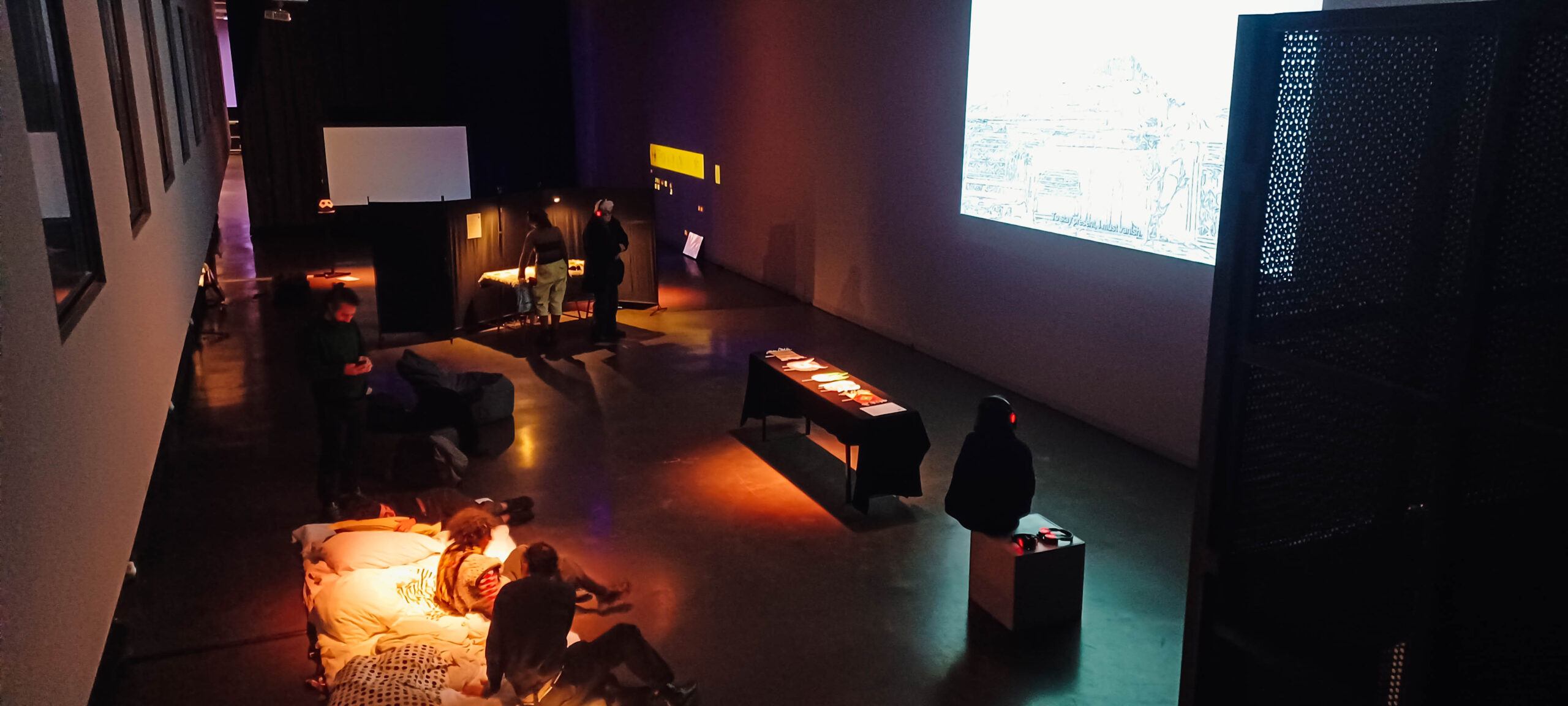
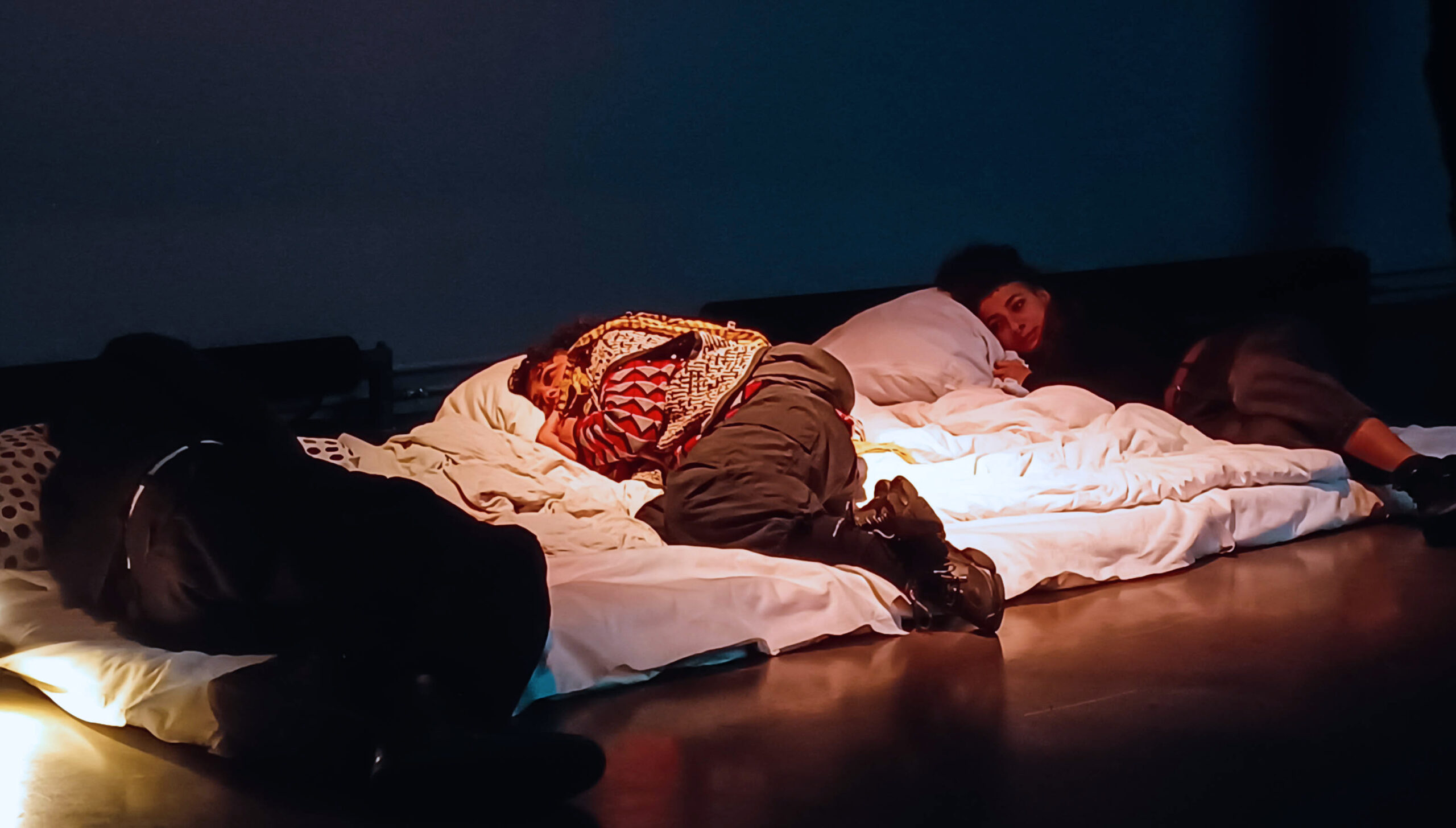
This sound-centric installation consists of a field of beds with speakers embedded in the pillows. The audience completes the work through physical interaction; the act of lying down activates a composition of archived field recordings, engaging the body as the primary site of listening.
The composition is drawn from field recordings made across different days, all marked by experiences of listening, waiting, and incident moments where safety felt fragile, and the gap between a sound and its full understanding widened. In SAFE & SOUND, the body's act of composing itself for repose reveals its parallel struggle to the mind's confrontation with the assault of sonic evidence from the past.
More on Mahoor Mirshakkak
Drummer on The Roof (2022)
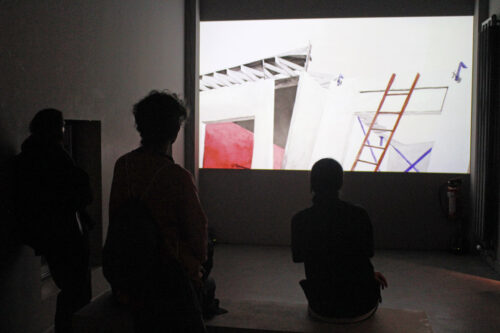
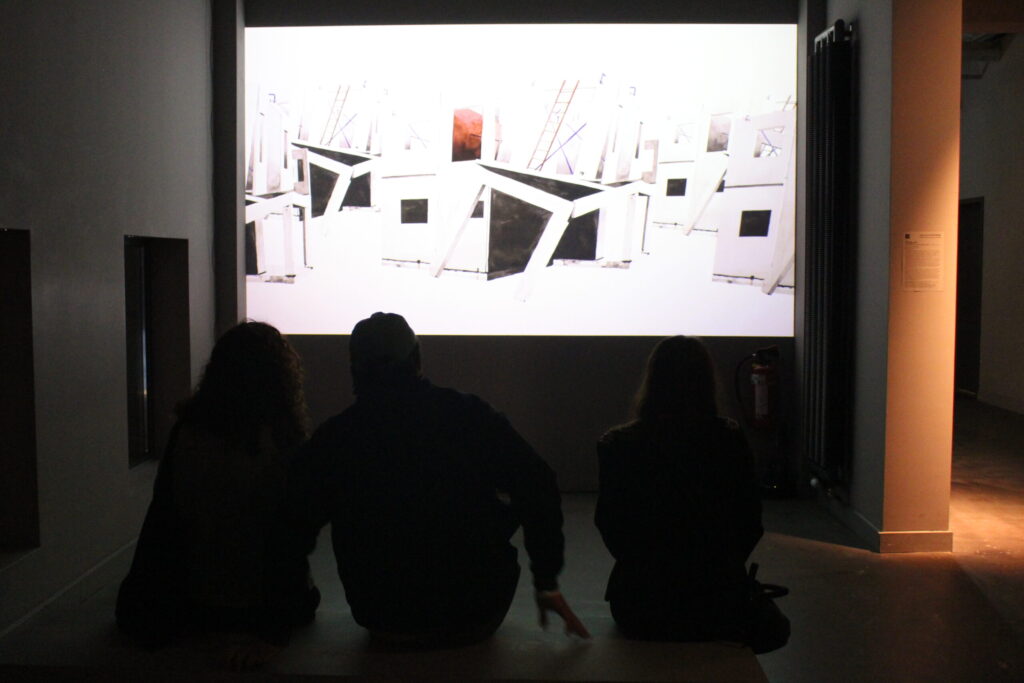
Sarvenaz Mostofey
It starts with the story of a person frustrated by noise, who applies an acoustic resistance through sound to subvert it. The sound piece combines a maze of ideas and memories, guiding the narrator of the story and the player of the character as if they were a cyborg contemplating the realities of social fiction. The story takes place on a very cold night in the winter of 2017, and deals with a working-class family living in a small city in the north of Iran. Their house is located by the Caspian Sea, basically the last one before the seashore. The family rents the upper floor of a two-story building. On the ground floor, there is a gym dedicated to martial arts, mainly karate. Every night, until late, the sounds of Hiyah!, Aiyah!, Eeee-yah!, or Hyah! of more than twenty men resonated throughout the building and the neighborhood. On some nights, its volume exceeded the sound of the rough sea.
On this particular night, the father, who might also be the daughter or any other family member, climbs onto the roof and hits it with an unidentified object as harsh, as hard, and as loud as one can imagine against all the Hi-yah!, Aiyah!, Eeee-yah!, or Hyah that has been experienced in life. What was the drummer trying to convey as a message, and did he succeed in silencing the din? The story is about the recording of this live drumming. The composition reenacts the sounds of contrasting forces within. The Kiai, the sea roar, the roof drum, and the songs lost in time.
Conceived, composed, and directed by Field recordings of an anonymous rooftop drummer captured by the artist | Drums by Amin Taheri | Visuals by Daniella Domingues
Drummer on the Roof was part of REUSE >> REFUSE (2021), an online audiovisual series featuring artists from NTS Radio, SHAPE platform in collaboration with depart.one, and Akademie Schloss Solitude.
Watch Here more on Sarvenaz Mostofey
Calling out (2025)
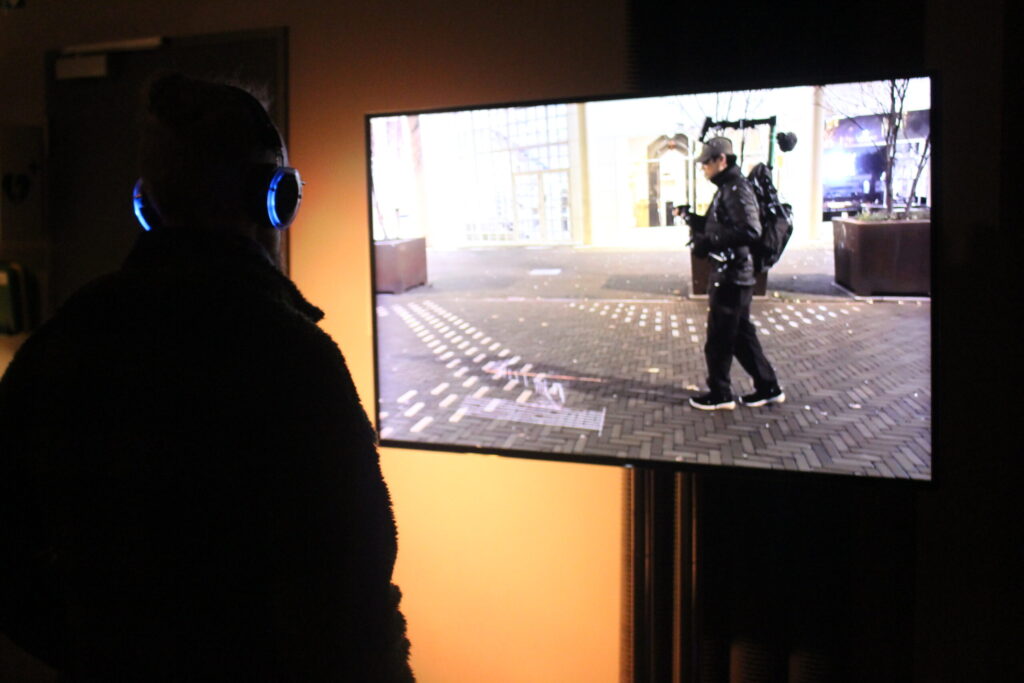
Erfan Abdi
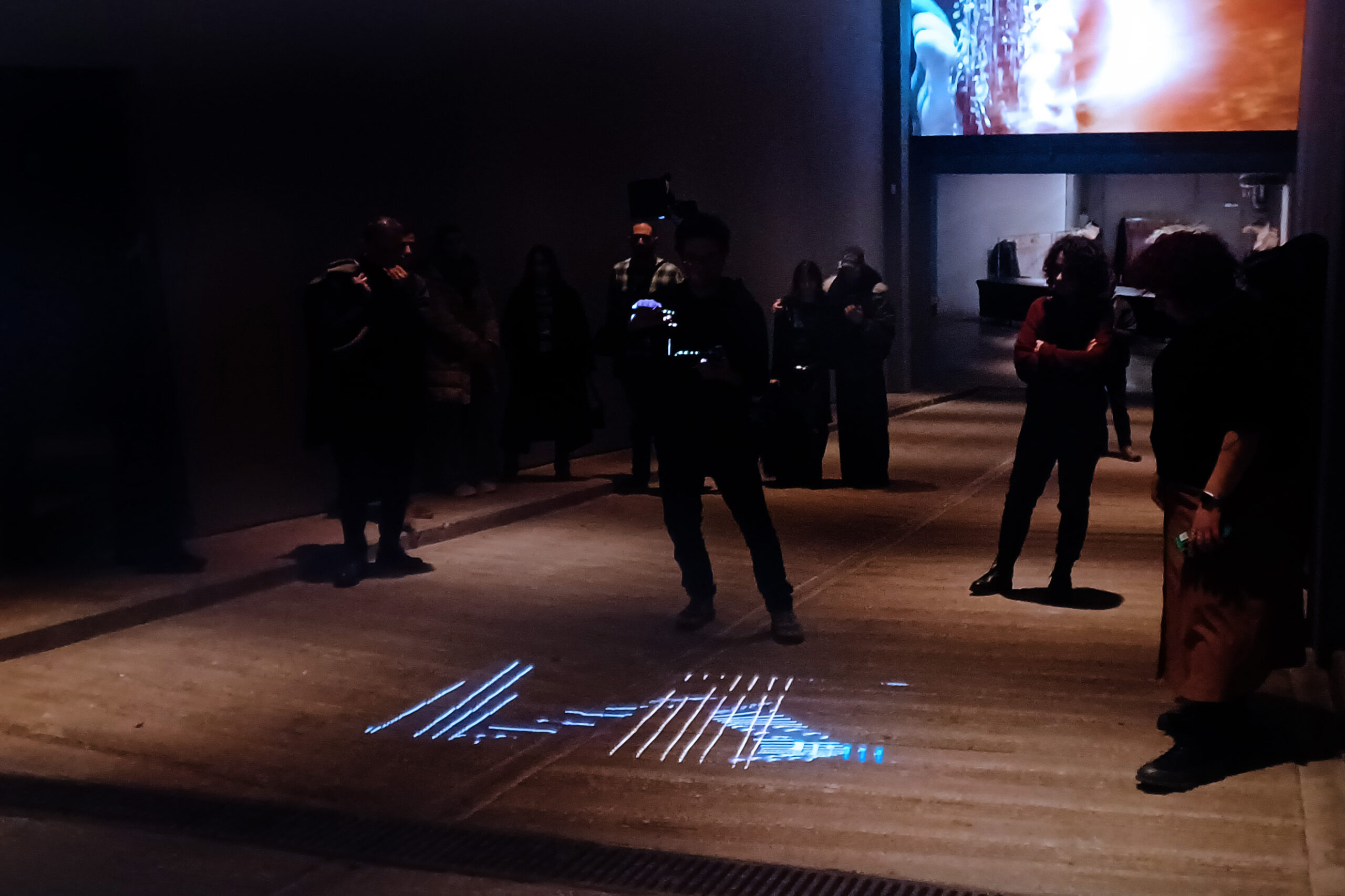
There is a ghost roaming around in the crematorium. One that seeks witness to an injustice taking place right in front of everyone. It cries injustice; while no one seems to hear, everyone knows. But as it is in a crematorium, the living stay silent in honor of the dead, and the dead won’t say a word. And so all bodies are silent. But the ghost never had a body, yet has witnessed thousands of them being burned to a crisp. One can hear the ghost calling the universe out on this injustice. In this “Calling Out”, a performer plays a wearable setup of Notesaaz while walking along the long ramp at the entrance of the Betonhalle, echoing the cries of this ghost and projecting on the cold solid concrete walls and floors of the crematorium.
Notesaaz is an instrument for live electronic music, and a proposal for a three-stage process where the physical controller is used to navigate within a graphical score that on its turn controls the sound generation. By showing the dynamic score to the performer and the audience, Notesaaz suggests new possibilities for staging the performer-instrument relationship, inviting the audience to engage more in what is played and to anticipate what happens next.
more about Notesaaz: erfanabdi.com/notesaaz
Performances:
Tactile Utterance (2025)
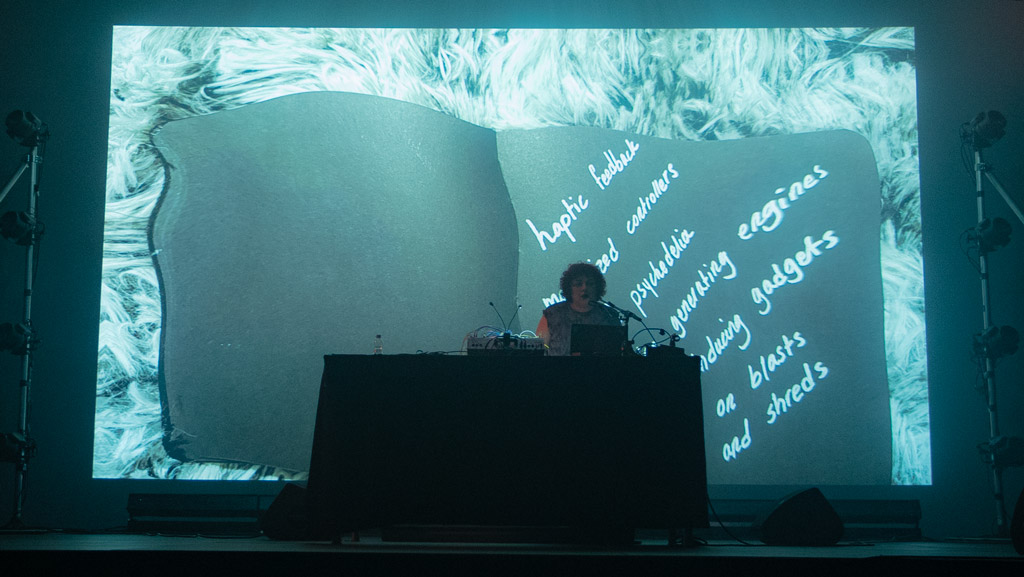
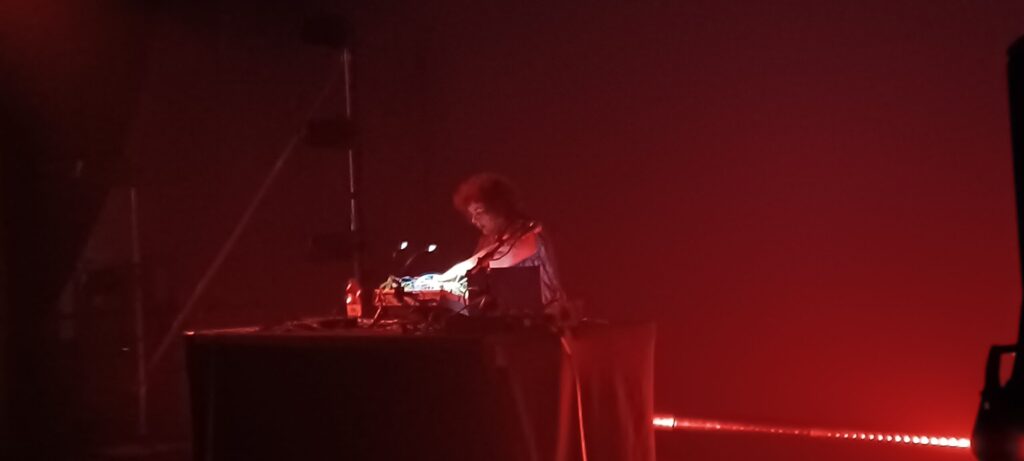
Aida Khorsandi
This lecture-performance presents ongoing doctoral research into the design and performance of new digital musical instruments (DMIs) with attention to the performer’s tactile and gestural interaction with the instrument. Grounded in Soma design, the project emphasizes participatory approaches, embodied musicking, and material engagement as pathways to more expressive and critically attuned musical practices.
The presentation interweaves performance with scholarly reflection, demonstrating how tactile and pliable materials can become sites for sonic exploration. The lecture foregrounds the somatic and gestural dimensions of music-making that are often overlooked in technologically driven context. The aim is to de-automize the tools for expressions, reintroduce constraint and inhibition, and to dignify embodied expression.
Drawing from material semiotics, Somaesthetics, and sound studies, this research situates instrument design as a relational and situated practice. Rather than framing new interfaces as purely technical achievements, this research positions them as cultural artifacts and epistemic tools shaped by human expression through haptics and sonic.
more on Aida Khorsandi
Calling out (2025)
Erfan Abdi
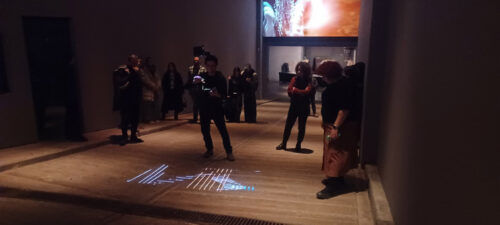
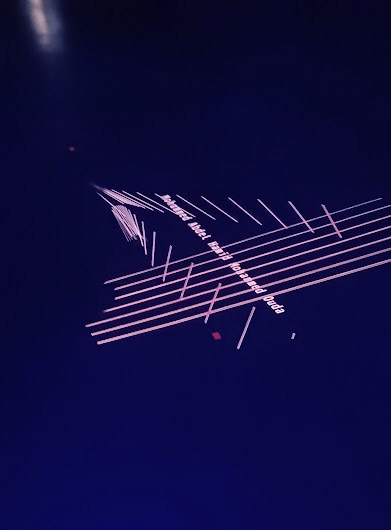
There is a ghost roaming around in the crematorium. One that seeks witness to an injustice taking place right in front of everyone. It cries injustice; while no one seems to hear, everyone knows. But as it is in a crematorium, the living stay silent in honor of the dead, and the dead won’t say a word. And so all bodies are silent. But the ghost never had a body, yet has witnessed thousands of them being burned to a crisp. One can hear the ghost calling the universe out on this injustice. In this “Calling Out”, a performer plays a wearable setup of Notesaaz while walking along the long ramp at the entrance of the Betonhalle, echoing the cries of this ghost and projecting on the cold solid concrete walls and floors of the crematorium.
Notesaaz is an instrument for live electronic music, and a proposal for a three-stage process where the physical controller is used to navigate within a graphical score that on its turn controls the sound generation. By showing the dynamic score to the performer and the audience, Notesaaz suggests new possibilities for staging the performer-instrument relationship, inviting the audience to engage more in what is played and to anticipate what happens next.
More about Notesaaz: erfanabdi.com/notesaaz
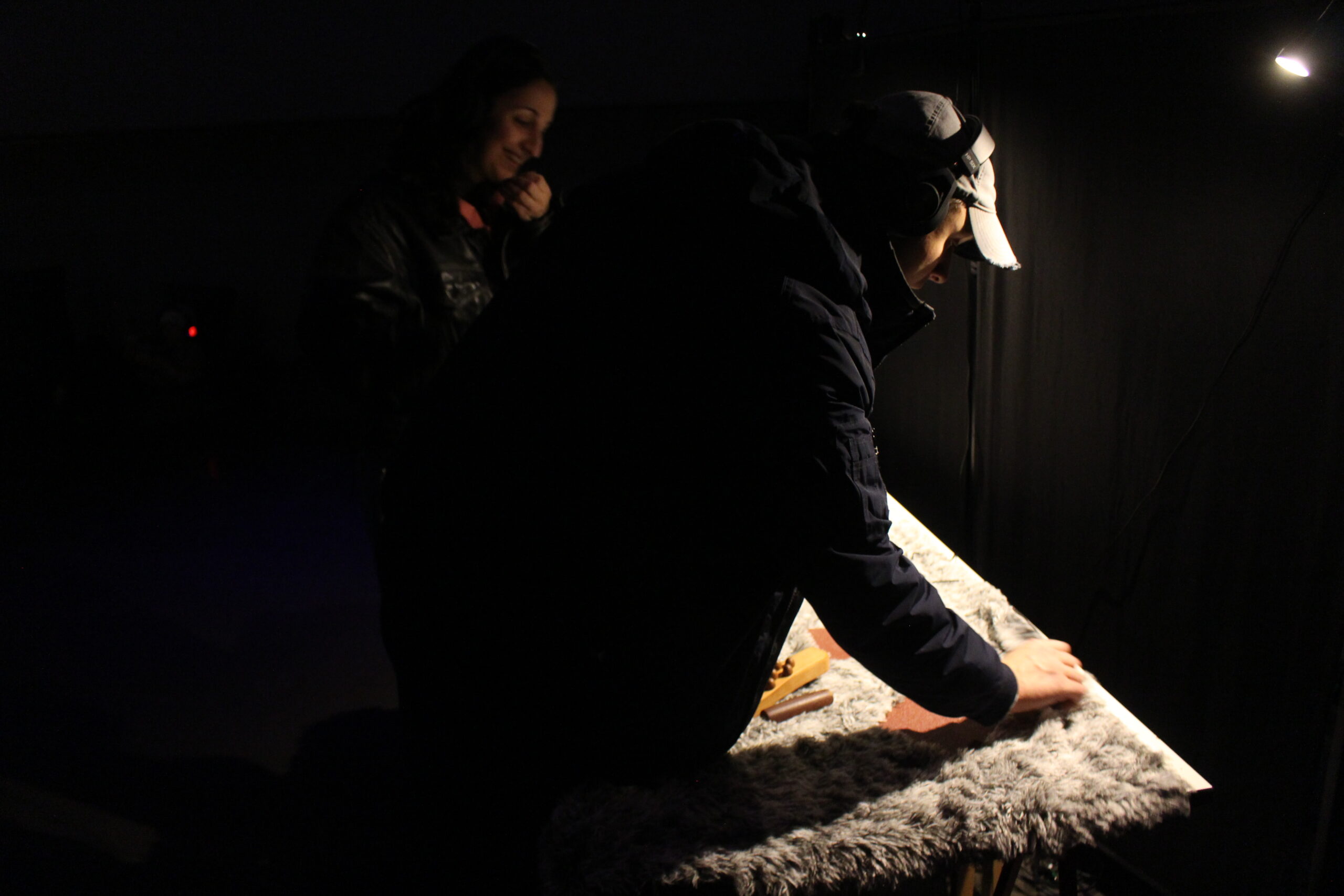
Exhibition Photos:
Aria Khalil, Samin Mousavi, Kyle Witzen, Elnaz Mohamadi Asl & Amirali Ghasemi
Special thanks to
Elnaz Mohamadi Asl, Mona Mohseni, Elahe Ahmadi, Zahra Rashid, Avisa Hashemi, Niusha Nasim, Bahar Ahmadifard, Dafne Narvaez Belfrin, Claire Terrian, Julia Brunner, Kotti-shop, Villa Kurisum, Samira Rabbani,
And
Shaahin Peymani, Behrooz Moosavi