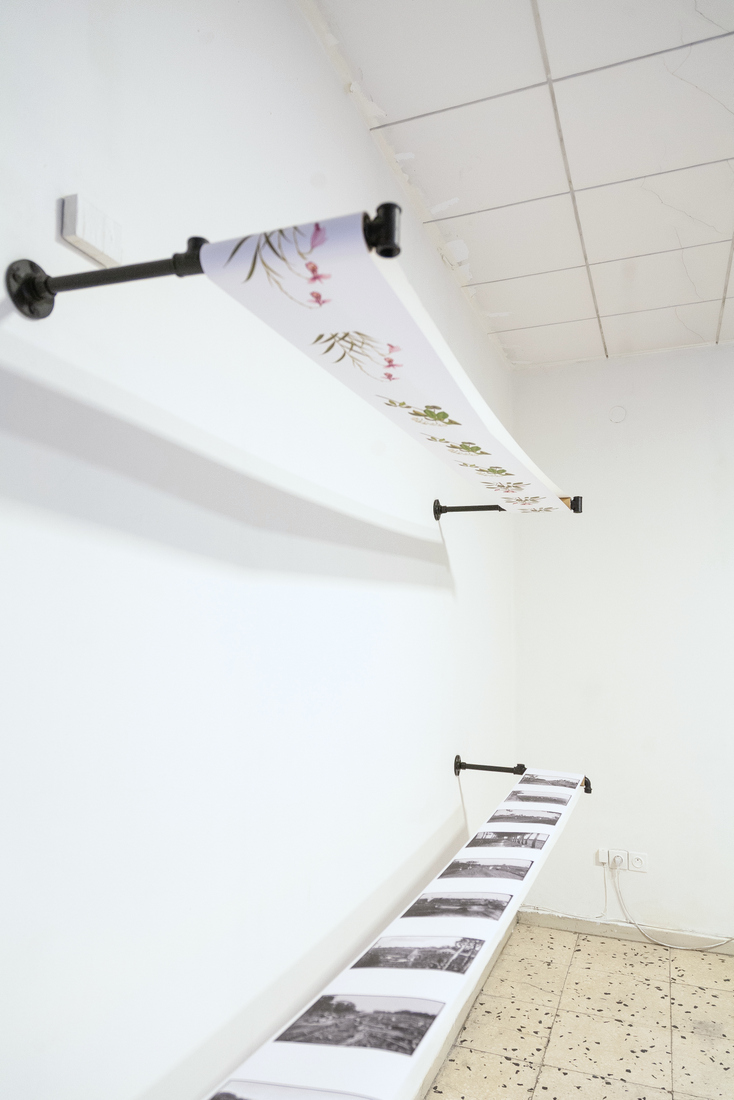


Removed Images from an Artwork on Historical Erasure
Room for Doubt - Tehran
An Installation by Bita Razavi
Friday, 29th of April to Thursday, 5th of May 2022
Room for Doubt will exhibit Bita Razavi's installation; “Removed images from an artwork on historical erasures" deals with a part of Bita Razavi's detailed installation unveiled last week at the Estonian pavilion at the Venice Biennale. This series of archival photographs, focusing on the changes that the colonialists have made to the colonies' landscapes as a result of looting and extravagant extraction of resources, was supposed to be part of the installation displayed in the pavilion entitled "", though as a result of the with the insistence and influence of the curator of this pavilion, this part of the installation was not included in the final show. Instead of these photos, some white stripes were substituted that formed the lower parts of this large installation.
Bita Razavi (1983) is a multidisciplinary artist who is best known for her use of narrative narratives that are based on her observations and reflections on the circumstances of everyday life. While working as a cleaner in Helsinki, Razavi captured traces of the role and design of Finnish houses in his photographs as manifestations of national identity (2010). She married a classmate in her studio at the Finnish Academy of Fine Arts to address Finland's immigration policies (2011). He spent four years rebuilding two houses in Estonia to study Soviet renovation materials throughout the years of changing economic and political conditions (2019). Razavi's works have been exhibited in biennials and won awards. The inclusion of his works in the museums' collection is one of the achievements that is expected from any outstanding artist.
Bita Razavi is in Venice at the time of writing the text of this show. By presenting the removed part of her work in a space inside his hometown, she tries to point out the complexities that arise when there are references to the dark colonial past of Europe: Attempts to obscure this part of Western history that challenges the notion of consistency and the illusion of freedom in different contexts.